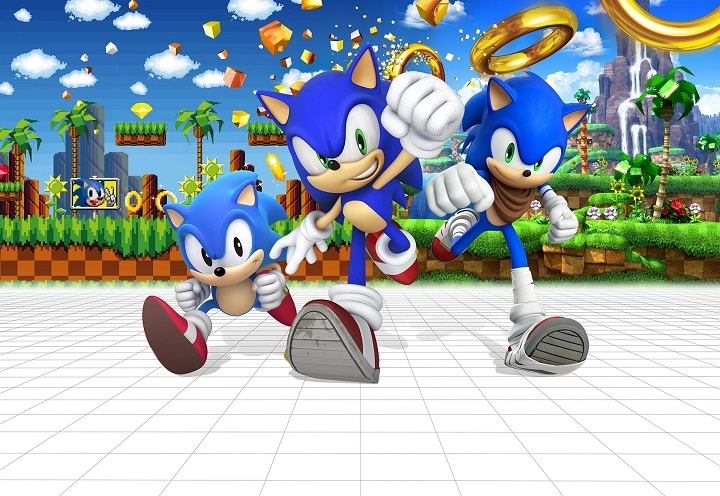

Before high-definition textures and 3D modeling took over the gaming world, Sonic the Hedgehog was defined by a specific, vibrant aesthetic: the pixel. From the moment he first laced up his Power Sneakers in 1991, Sonic’s identity was forged through carefully placed squares of color that captured a sense of “attitude” and velocity that 16-bit hardware had never seen before.
These sprites weren’t just static images; they were masterclasses in character animation. Whether it was Sonic tapping his foot in a famous “idle” animation or the blue blur turning into a spinning sawblade of speed, these pixelated assets breathed life into the Sega Genesis. Today, Sonic sprites have transcended their original consoles to become a cornerstone of digital art, fan games, and a nostalgic subculture that proves you don’t need millions of polygons to create an icon.
In This Deep Dive, We’ll Explore:
-
The Evolution of Blue: How Sonic’s sprites shifted from the 8-bit Master System to the legendary 16-bit Genesis.
-
The “Attitude” Animation: Why Sonic’s idle sprites changed the way we perceive game characters.
-
The Modern Sprite Renaissance: How fans are keeping the pixel art style alive in the era of Sonic Mania.
-
Resources for Creators: Where to find and how to use sprite sheets for your own fan projects.
What Are Sonic Sprites?

Sprites are pixel-based images used in 2D video games to represent characters, objects, and environments. In the Sonic series, sprites were used to animate Sonic’s running, jumping, and spinning movements. These small, detailed graphics played a significant role in defining Sonic’s visual style during the 16-bit era.
Famous Sonic Sprites Over the Years
Classic Sonic (1991)
- Game: Sonic the Hedgehog (Genesis)
- Look: A sleek blue hedgehog with a confident smirk.
- Signature Animation: Sonic’s impatient toe-tapping idle pose became iconic.
Super Sonic (1992)
- Game: Sonic the Hedgehog 2
- Look: A golden version of Sonic with spiked hair, representing his powered-up form.
- Signature Animation: Flashy transformation sprites that showed energy and
Spin Dash (1992)
- Game: Sonic the Hedgehog 2
- Look: Sonic curls into a ball, charging up his spin dash.
- Why It’s Loved: This sprite animation brought dynamic movement to the gameplay.
Modernized Sprites (1994)
- Game: Sonic the Hedgehog 3 & Knuckles
- Look: More detailed and fluid animations.
- New Features: Added sprites for climbing, snowboarding, and interacting with objects.
Why Sonic Sprites Are Iconic
- Personality in Pixels: Despite the limitations of early consoles, Sonic’s sprites exuded confidence, speed, and charisma.
- Smooth Animations: The fluid movement of Sonic’s sprites set a new standard for platformers.
- Retro Charm: The pixelated art style remains beloved by fans, representing the golden age of gaming.
Sonic Sprites in Fan Creations
Sonic sprites have inspired countless fan-made projects, including:
- Fan Games: Classic-style Sonic games made by fans using sprite assets.
- Animations: Pixel art videos and GIFs bringing Sonic’s adventures to life.
- Mods: Custom sprites created for use in existing Sonic games.
Using Sonic Sprites Today

Sprite Sheets
- What They Are: Collections of individual sprite images used in games.
- Where to Find Them: Online archives like Spriters Resource host Sonic sprite sheets.
- For Fans and Developers: Ideal for creating fan art, animations, or retro-style games.
GIF Animations
- Popular Uses: Social media posts, forums, and memes.
- Examples: Sonic running loops, spin dash animations, or iconic idle poses.
The “Blur” Effect: The Technical Wizardry Behind the Speed
It’s one thing to draw a hedgehog; it’s another to make him look like a subsonic streak across a cathode-ray tube television. The developers at Sega used several “sprite hacks” that are still studied by pixel artists today to simulate velocity on limited hardware.
The “Spin Ball” Illusion
When Sonic jumps or performs a Spin Dash, he doesn’t just turn into a circle. The designers created a rotating sequence of frames that utilize motion lines and color cycling. By rapidly swapping between different shades of blue and white in a circular pattern, they tricked the human eye into seeing a blurred, high-speed sawblade rather than a series of static images.
Squashing and Stretching
One of the secrets to Sonic’s “fluid” feel is a classic animation principle called Squash and Stretch.
-
The Squash: When Sonic lands from a high jump, his sprite momentarily flattens.
-
The Stretch: When he takes off at top speed, his torso and limbs elongate. This wasn’t just for style; these few frames of distortion gave the 16-bit sprites a “weight” and “elasticity” that made the gameplay feel more responsive and organic compared to the stiffer movements of his contemporary rivals.
Pallete Swapping and Underwater Physics
In levels like Labyrinth Zone, the developers didn’t create entirely new sprites for when Sonic went underwater. Instead, they used Palette Swapping. By shifting the color hex codes of the existing sprite to a more muted, greenish-blue tint, they instantly conveyed a sense of submersion without using up precious memory on the cartridge.
Evolution of Sonic Sprites
While modern Sonic games feature 3D graphics, sprites are still celebrated in:
- Retro Remakes: Games like Sonic Mania bring back the classic sprite-based look.
- Mobile Games: Some titles use updated sprite art for nostalgic appeal.
- Fan Art and Pixel Projects: The charm of sprite-based Sonic lives on in the community.
Why Sonic Sprites Matter
Sonic sprites represent more than just gaming graphics; they’re a piece of history. They showcase how early developers pushed the limits of technology to create memorable characters. For fans, these sprites remain a beloved part of Sonic’s legacy.
Whether you’re a fan of retro gaming or just love Sonic’s early style, Sonic sprites are a timeless piece of gaming art. Their charm, creativity, and impact on the industry make them a cornerstone of the Sonic the Hedgehog franchise.